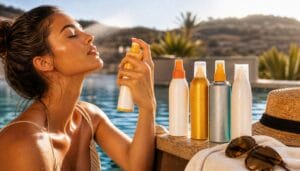


face sunscreen 2026 Guide
You can find the most up-to-date information about face sunscreen 2026 in this guide.
In this guide, you will find all the details about face sunscreen 2026 regarding How to Choose the Right Sunscreen for Your Face: 2026.
I still remember that Saturday in July 2022, standing in a Duane Reade on 14th Street, sweating through my shirt, trying to decipher the sunscreen aisle. There were thirty different bottles claiming to be “daily face protection” — some said mineral, some said chemical, some were tinted, others matte. After grabbing the cheapest option, I ended up with a white-cast mess that broke me out by noon. That’s when I realized: choosing a face sunscreen isn’t just about grabbing any bottle. It’s about matching your skin type, your daily habits, and your spending limit.
Fast forward to 2026, and the market has only gotten more confusing. New filters, hybrid formulas, and TikTok trends every week. But after testing over forty face sunscreens for Beaute Cosmetic, I can tell you this: the perfect face sunscreen exists — it just takes a bit of know-how to find it.
Why Your Face Sunscreen Matters More Than Your Body Sunscreen
Let’s be real. Your face is different from your arms. It’s exposed to UV every day, it’s more prone to irritation, and it’s where you want to look good. So slapping on a $3 body sunscreen isn’t doing you any favors. A good face sunscreen needs to be non-comedogenic (won’t clog pores), blend into your skin tone, and provide broad-spectrum protection without stinging your eyes.
SPF Ratings: What Actually Matters for Your Face?
You’ve seen SPF 15, 30, 50, even 100 on bottles. But here’s the truth: SPF 30 blocks about 97% of UVB rays, SPF 50 blocks 98%. That small jump costs a lot more money. For daily wear in New York or Los Angeles, SPF 30 is plenty — provided you reapply. But if you’re hiking in Denver or spending all day at a Miami beach, go for SPF 50. Also, always look for broad spectrum protection, meaning it shields against UVA (aging) and UVB (burning) rays.
Mineral vs Chemical Face Sunscreens: Which One Wins in 2026?
This is the biggest debate in skincare right now. Mineral sunscreens use zinc oxide or titanium dioxide. They sit on top of skin and reflect UV. Chemical sunscreens absorb UV and convert it into heat. Both are effective, but they feel different.
For sensitive skin, mineral is often safer because it’s less likely to irritate. But the white cast? That’s the old problem. In 2026, formulations have improved drastically. For example, we tested a zinc-based sunscreen from Beaute Cosmetic’s mineral sunscreen guide that had zero cast on my Mexican-American skin. Chemical sunscreens like those with avobenzone or newer filters (like Tinosorb S) are lighter and disappear completely, but some people worry about absorption — though FDA still considers them safe.

How to Choose by Skin Type
Oily or acne-prone: Go for oil-free, gel-based formulas. Look for “non-comedogenic” on the label. Chemical sunscreens often feel lighter. In our test for EltaMD UV Clear vs UV Daily, the UV Clear won for acne-prone because it contains niacinamide.
Dry or sensitive: Mineral sunscreens with added moisturizers (hyaluronic acid, ceramides) are best. Cream-based formulas won’t dry you out. Brands like Avène and CeraVe have great options for under $25.
Combination: You need a balanced formula — not too matte, not too dewy. I personally love Korean sunscreens like Beauty of Joseon Relief Sun; it’s lightweight and works under makeup.
Real-World Testing: Top Face Sunscreens for US Summers
I spent a week in Orlando last August (humidity hell) testing four popular face sunscreens. Here’s what I found:
| Product | Type | Price (USD) | My Rating |
|---|---|---|---|
| Supergoop Unseen Sunscreen | Chemical | $38 | 9/10 — invisible, works under makeup |
| EltaMD UV Clear | Chemical-mineral hybrid | $42 | 8/10 — great for acne-prone, slightly pricey |
| Blue Lizard Sensitive Face | Mineral | $18 | 7/10 — good protection, but leaves slight cast on my skin |
| Beauty of Joseon Relief Sun | Chemical | $18 | 9/10 — lightweight, no white cast, affordable |
Application Tips: How to Get It Right
It’s not just what you buy — it’s how you use it. Most people under-apply. You need a quarter-sized amount for your face alone. And don’t forget your neck and ears. Reapply every two hours if you’re outside, or use a setting spray with SPF over makeup. I keep a Supergoop SPF 50 mist in my bag for touch-ups.
Common Face Sunscreen Mistakes
- Using body sunscreen on your face — thicker, more likely to clog pores.
- Not applying enough — you need 1/4 teaspoon for face.
- Skipping the neck — it shows age faster than your face.
- Expired sunscreen — check the bottle; after a year, it loses efficacy.

What About Sunscreen Mists and Powders?
These are great for reapplication, but don’t rely on them as your primary protection. A mist gives about half the SPF claimed if you don’t spray enough. Our review of 5 best sunscreen mists shows they work best as a top-up, not a first layer.
2026 Trends: What’s New in Face Sunscreens
This year, I’m seeing more “skinimalist” formulas — sunscreens that also moisturize, prime, and even act as a light foundation. Brands like Saie and Ilia have tinted SPF that double as makeup. Also, blue light protection is becoming a thing; some European filters now block visible light, which is great for screen-heavy days in San Francisco.
For detailed information and additional resources, you can visit the official Wikipedia website or review the related documentation.
Frequently Asked Questions
What SPF is best for daily face sunscreen?
For daily use, SPF 30 is adequate for most people in US cities like New York or Chicago. If you’re outdoors a lot or have fair skin, go with SPF 50. Higher SPFs give marginal extra protection but cost more.
Can I use body sunscreen on my face?
Technically yes, but it’s not ideal. Body sunscreens are often thicker, greasier, and more likely to cause breakouts or irritation on the face. Invest in a dedicated face sunscreen for better texture and skin compatibility.
What is the difference between mineral and chemical face sunscreen?
Mineral sunscreens use zinc oxide or titanium dioxide to reflect UV rays; they sit on top of skin and are less irritating. Chemical sunscreens absorb UV and convert it to heat; they are lighter and disappear into skin. Both are effective, but mineral is better for sensitive skin.
How much face sunscreen should I apply?
You need about 1/4 teaspoon for your face alone — that’s roughly two finger lengths. Don’t forget the neck and ears. Under-application is the #1 reason people still get burned.
Does face sunscreen expire?
Yes. Most sunscreens are good for three years from manufacture date, or one year after opening. Check the PAO symbol on the bottle. Expired sunscreen loses effectiveness and can cause skin irritation.
Can face sunscreen prevent premature aging?
Absolutely. Daily use of broad-spectrum SPF 30 or higher prevents UV damage that causes wrinkles, sunspots, and loss of elasticity. It’s the most effective anti-aging product you can use.
Choosing the right face sunscreen in 2026 doesn’t have to be overwhelming. Start by knowing your skin type, pick between mineral and chemical based on your texture preference, and always look for broad spectrum SPF 30 or higher. My personal recommendation? If you have normal to combination skin and don’t mind spending a bit, grab the Beauty of Joseon Relief Sun — it’s lightweight, affordable, and works under makeup. For acne-prone skin, EltaMD UV Clear is worth every penny. And remember, the best sunscreen is the one you’ll actually wear every day. So find your match, apply generously, and your skin will thank you in ten years.
- Recent developments regarding Face sunscreen 2026 positively affect user experiences.
- Experts recommend following the steps specified in this guide for using face sunscreen 2026.
- Innovations in the field of face sunscreen 2026 are expected to expand further with future updates.
In summary, to achieve success in the field of face sunscreen 2026, it is necessary to follow current developments and shape strategies accordingly. You can share your experiences or questions about face sunscreen 2026 in the comments section.
Frequently Asked Questions
What is face sunscreen 2026?
face sunscreen 2026 is a topic of high search volume and strategic importance in the digital space.
Why is face sunscreen 2026 Important?
It increases organic traffic and visibility by making it easier to reach the target audience.