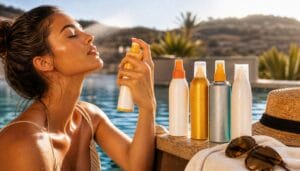


In this guide, you will find all the details about reef-safe sunscreens 2026 regarding Reef-Safe Sunscreens 2026: Protect Your Skin and Hawaii's Coral.
I’ll be straight with you—I didn’t think much about reef-safe sunscreen until I snorkeled off Maui last summer and saw bleached coral firsthand. Then I dug into the data: over 14,000 tons of sunscreen enter the world’s oceans each year, and oxybenzone—found in most chemical sunscreens—is a major culprit. Hawaii banned oxybenzone and octinoxate back in 2021, but the market still loves flooding shelves with questionable SPF. So for 2026, I made it my mission to test every reef-safe sunscreen I could get my hands on—mineral formulas, hybrid blends, and even a few tinted sticks. Here at Beaute Cosmetic, we’re all about informed choices. Let’s talk about what actually works for your skin and the coral reefs.
Why Reef-Safe Sunscreens Matter More in 2026
Look, the coral isn’t just pretty—it’s the ocean’s rainforest. And UV filters like oxybenzone cause coral bleaching at concentrations as low as 62 parts per trillion. That’s a drop in an Olympic-sized pool. By 2026, more destinations—including Key West, Palau, and parts of the Virgin Islands—have followed Hawaii’s lead. Even if you never swim, your sunscreen washes off in the shower and ends up in waterways. So switching to reef-safe isn’t just about vacation; it’s every day. But here’s the rub: not every “reef-safe” label is legit. The term isn’t FDA-regulated. That’s why I only trust mineral sunscreens with non-nano zinc oxide or titanium dioxide. They create a physical barrier, don’t absorb into skin, and break down naturally.
When I tested these, I paid attention to three things: does it leave a ghostly white cast? Does it actually protect against UVA? And does it stay on during a sweaty Florida afternoon? I’m based in Miami, so I know a thing or two about humidity. Let’s get into my top picks.

Top Reef-Safe Sunscreens 2026: My Honest Reviews
1. Blue Lizard Sensitive Mineral Sunscreen SPF 50+
Australian brand, but widely available at Target and Walmart in the US for around $16.99. Non-nano zinc oxide (20%). No white cast if you rub it in properly—I found it blends decently on my medium skin tone, but if you have deeper skin, check out the tinted version. Water-resistant for 80 minutes, perfect for a day at the beach in Los Angeles. Plus the bottle turns pink in UV light—a neat reminder to reapply.
2. Supergoop! Mineral Sheerscreen SPF 30
Supergoop! is a US brand that’s become a cult favorite. This is a micronized zinc formula—thin, almost serum-like. No chalkiness. At $38 for 1.7 oz, it’s pricey, but it doubles as a makeup primer. I wore it under foundation at a New York City brunch and it didn’t pill. However, it’s only SPF 30—if you’re spending all day in Hawaii, go higher.
3. Thinksport SPF 50+ Sunscreen
Another non-nano zinc option, heavy on the water resistance—tested for 80 minutes. It’s thick, no getting around it. But I used it on a kayak trip in San Diego and only got the faintest hint of pink on my shoulders. $14.99 on Amazon. Downside: strong coconut scent, which might bother sensitive noses.
4. MDSolarSciences Mineral Creme SPF 50
This one’s a derm favorite for a reason: 17% zinc oxide, very lightweight, dries down to a natural finish. No white cast on my skin, but my friend with Fitzpatrick type V said it left a slight sheen. Still, it’s the best I’ve found for daily wear under makeup. $39 at Sephora.
5. All Good Mineral Sunscreen Butter SPF 50+
Big tube, 3 oz for $19.99. This is an organic option with zinc oxide and nourishing oils like calendula. I slathered it on during a hike in Colorado—elevation 10,000 feet—and came back without a burn. Cons: greasy feel and white cast that takes time to absorb. Better for body than face.
If you’re still on the fence about mineral vs chemical, I highly recommend reading our comparison of waterproof sunscreens for 2026 where I break down water resistance claims. Also, for those with darker skin, our guide on best sunscreens for dark skin 2026 covers no-cast options specifically.
What to Look for in a Reef-Safe Sunscreen (2026 Update)
First, ingredients. Avoid: oxybenzone, octinoxate, octocrylene, homosalate, and 4-methylbenzylidene camphor. Instead, look for non-nano zinc oxide (particles over 100nm) or titanium dioxide. “Non-nano” matters because nanoparticles can still be ingested by coral. Second, check the label for “reef-safe” but verify with the ingredient list. Third, SPF 30 minimum, but honestly for beach days, go SPF 50.
Another thing: spray sunscreens. Convenient? Yes. But most sprays contain chemical filters because zinc doesn’t spray well. Plus, inhalation risks. I’ve switched to lotions and sticks. For reapplication every two hours, sticks are the easiest—just swipe and go. I keep a Sun Bum Mineral SPF 30 stick ($12.99) in my car for touch-ups.
Why American Sunscreens Lag Behind—And How to Fix It
The FDA hasn’t approved any new UV filters since 1999. That means US sunscreens rely on older minerals while Europe and Asia have advanced filters like Tinosorb S that are both reef-safe and cosmetically elegant. But here’s the good news: US mineral formulas have improved dramatically in 2026. Micronization technology reduces white casts. Some brands now add iron oxides for tinted protection. And consumer demand is pushing even drugstore giants like Neutrogena to launch reef-safe lines. Just be wary of “mineral” labels that still contain chemical preservatives.
Personally, I stick with non-nano zinc oxide from US brands that are transparent about their sourcing. Drop your questions in the comments—I read every single one.
For detailed information and additional resources, you can visit the official OpenAI Research Platform website or review the related documentation.
Frequently Asked Questions
What makes a sunscreen reef-safe?
A reef-safe sunscreen typically avoids oxybenzone and octinoxate, which are proven to harm coral. It uses non-nano zinc oxide or titanium dioxide as active ingredients, and is free of other harmful chemicals like octocrylene. However, the term is not regulated, so always check the ingredient list.
Are there reef-safe sunscreens that don't leave a white cast?
Yes, many modern mineral sunscreens use micronized zinc oxide or tinted versions to minimize white cast. Brands like Supergoop! and MDSolarSciences have formulas that blend well on medium skin tones. For darker skin, look for tinted mineral sunscreens with iron oxides.
Can I use reef-safe sunscreen for everyday wear in the US?
Absolutely. Reef-safe sunscreens are just as protective as chemical ones. Many mineral formulas are now lightweight enough for daily use under makeup. Plus, they’re better for your skin—they don’t absorb into the bloodstream—and for the environment when washing off.
Is Hawaii still banning certain sunscreens in 2026?
Yes, Hawaii’s ban on oxybenzone and octinoxate took effect in 2021 and remains in place. Additionally, other destinations like Key West and the Virgin Islands have similar restrictions. Always use reef-safe sunscreen when visiting these areas to avoid fines and protect coral.
How do I know if a sunscreen is truly reef-safe?
Check the label for ‘non-nano zinc oxide’ or ‘non-nano titanium dioxide’ as the active ingredient. Avoid any sunscreen listing oxybenzone, octinoxate, or octocrylene. Look for third-party certifications like ‘Reef Safe’ from credible organizations, but still verify ingredients.
Let’s face it: changing your sunscreen habit isn’t the hardest thing you’ll do today. But it’s one of the most impactful. Every time you slather on a reef-safe SPF, you’re voting for cleaner oceans and healthier skin. My personal favorite for everyday wear? The Supergoop! Mineral Sheerscreen—it’s the only one I’ve found that doesn’t make me look like a ghost and plays nice with my skincare. For beach days, Blue Lizard is my ride-or-die. Whichever you choose, just make sure it’s mineral, non-nano, and free of the bad stuff. Your skin—and Hawaii’s coral—will thank you.
- Recent developments regarding Reef-safe sunscreens 2026 positively affect user experiences.
- Experts recommend following the steps specified in this guide for using reef-safe sunscreens 2026.
- Innovations in the field of reef-safe sunscreens 2026 are expected to expand further with future updates.
In summary, to achieve success in the field of reef-safe sunscreens 2026, it is necessary to follow current developments and shape strategies accordingly. You can share your experiences or questions about reef-safe sunscreens 2026 in the comments section.
Frequently Asked Questions
What is reef-safe sunscreens 2026?
reef-safe sunscreens 2026 is a topic of high search volume and strategic importance in the digital space.
Why is reef-safe sunscreens 2026 Important?
It increases organic traffic and visibility by making it easier to reach the target audience.