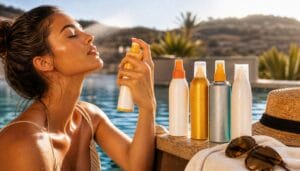


read sunscreen labels Guide
You can find the most up-to-date information about read sunscreen labels in this guide.
In this guide, you will find all the details about read sunscreen labels regarding How to Read Sunscreen Labels: 2026 US Guide to SPF & Ingredients.
I’ll be honest—I used to grab any sunscreen off the shelf and hope for the best. Then I got a sunburn that peeled for a week (in March, no less). That’s when I realized I had no clue what those labels actually meant. SPF? Broad spectrum? Active ingredients? It’s a mess of jargon. But here’s the thing: understanding a sunscreen label isn’t just for science nerds—it’s the difference between real protection and burning through your summer. In this 2026 US guide, I’ll break down exactly how to read sunscreen labels so you never get duped by marketing fluff again. From SPF numbers to the latest FDA rules, consider this your cheat sheet.
What Does SPF Actually Tell You?
SPF stands for Sun Protection Factor, but it’s not a simple “hours of protection” number. It measures how much UVB radiation (the kind that burns) gets through. An SPF 30 blocks about 97% of UVB rays; SPF 50 blocks 98%. See the tiny difference? That’s why I always grab SPF 50 for long beach days, but honestly, SPF 30 is fine for casual walks.
But here’s the kicker: SPF says nothing about UVA protection—the rays that cause aging and skin cancer. That’s why you need broad spectrum. In the US, the FDA requires broad spectrum labeling for products that pass a specific UVA test. If it says “broad spectrum SPF 30,” you’re covered for both UVA and UVB. If it just says “SPF 30” without “broad spectrum,” you’re only getting UVB protection. Scary, right?
I’ve tested a ton of sunscreens for Beaute Cosmetic’s 2026 sunscreen guide, and I can tell you—the broad spectrum label is non-negotiable. Don’t buy anything without it.

Mineral vs. Chemical Sunscreens: How to Spot Them
Flip the bottle and look at the active ingredients. Mineral (or physical) sunscreens contain zinc oxide or titanium dioxide. They sit on top of your skin and reflect UV. Chemical sunscreens contain ingredients like avobenzone, octinoxate, or oxybenzone—they absorb UV and turn it into heat.
Which is better? It depends. Mineral sunscreens start working immediately and are less likely to irritate sensitive skin. But they can leave a white cast (though newer formulas are way better). Chemical sunscreens feel lighter and sink in faster, but some ingredients (like oxybenzone) are controversial for reef health and potential hormone disruption. The FDA is still evaluating them, but for now, both are approved.
Personally, I’m a fan of mineral sunscreens for daily wear—especially the ones from brands like Supergoop! and Blue Lizard. But for sweaty hikes, I reach for a chemical spray. However, if you’re worried about white cast on darker skin tones, check out our best sunscreens for dark skin 2026 picks—they tested over 10 options under $30.
Reading the Active Ingredients List
The FDA requires active ingredients to be listed in the Drug Facts box. For a chemical sunscreen, you’ll usually see multiple active ingredients because each one covers different UV wavelengths. For example, avobenzone covers UVA but degrades quickly, so it’s paired with octocrylene or oxybenzone to stabilize it. Mineral sunscreens typically list only zinc oxide and/or titanium dioxide.
One tip: look for zinc oxide concentration. A higher percentage (15-20%) means better UVA protection. But don’t obsess over percentages—just make sure it’s broad spectrum.
Water Resistance: What Those Minutes Mean
You’ve seen “water resistant 40 minutes” or “80 minutes” on bottles. That’s the time your sunscreen stays effective during water exposure or sweating. The FDA test is strict: after that time, you must reapply. But here’s the truth—even water-resistant sunscreen can come off after 40 minutes of swimming. I always set a timer on my phone. And “waterproof” is no longer allowed—the FDA banned it because no sunscreen is truly waterproof.
If you’re planning a beach day in Florida, check out our waterproof sunscreens 2026 guide for top picks that held up against real sweat and waves.
Claims You Should Ignore (and One You Shouldn’t)
Marketing loves buzzwords. “Natural” doesn’t mean FDA-approved for safety. “Organic” is unregulated for sunscreen. But reef-safe is a claim that’s gaining traction, especially in Hawaii where oxybenzone and octinoxate are banned. However, there’s no official FDA definition. I look for sunscreens labeled “reef-friendly” that avoid those two ingredients plus octocrylene and homosalate. For a deep dive, read our reef-safe sunscreens 2026 article.
Also, ignore “sunscreen pills” or “SPF makeup” claims—powders and brushes rarely provide enough coverage unless you cake it on. Stick to proper lotions, sprays, or sticks.

Expiration Dates and Storage
Yes, sunscreen expires. The FDA requires a three-year shelf life, but if you leave it in a hot car, it degrades faster. Always check the expiration date on the bottle (not all have them, but it’s required). If it’s past expiration, the active ingredients break down and won’t protect you. I once used a two-year-old bottle and got burned in an hour. Learn from my mistake.
For more on this, see our sunscreen expiration dates guide.
What About the PA Rating?
You’ll sometimes see PA+ to PA++++ on Asian sunscreens—that’s the Japanese UVA protection rating. It’s not required by the FDA, but it’s a helpful extra. The more pluses, the better UVA coverage. I personally love PA++++ for daily wear. But don’t confuse it with SPF—they measure different things.
If you’re curious about Asian vs. US sunscreens, check our comparison: Korean vs US sunscreens 2026.
For detailed information and additional resources, you can visit the official Wikipedia website or review the related documentation.
Frequently Asked Questions
What does SPF 30 vs SPF 50 mean in real life?
SPF 30 blocks about 97% of UVB rays, while SPF 50 blocks 98%. The difference is small—about 1%—but if you’re fair-skinned or outdoors all day, SPF 50 gives a bit more leeway. Both require reapplication every two hours.
Is it bad if my sunscreen doesn't say 'broad spectrum'?
Yes—skip it. Without ‘broad spectrum’ on the label, you’re only protected from UVB rays, not UVA. UVA causes premature aging and can contribute to skin cancer. Always look for that phrase.
How do I know if a sunscreen is mineral or chemical?
Check the ‘Active Ingredients’ in the Drug Facts box. If it lists zinc oxide or titanium dioxide, it’s mineral. If it lists avobenzone, octinoxate, oxybenzone, or similar, it’s chemical.
What does 'water resistant 80 minutes' really mean?
It means the sunscreen maintains its SPF after 80 minutes of water exposure or heavy sweating. After that, you need to reapply. Most tests are done in controlled conditions—so in real life, it might wear off sooner if you’re rubbing with towels.
Are there any ingredients I should avoid?
Oxybenzone and octinoxate are controversial due to coral reef damage. Hawaii and Key West have banned them. For personal health, some people prefer to avoid oxybenzone because of potential hormone disruption, but the FDA still considers it safe. Mineral sunscreens are a great alternative.
Can I use a sunscreen with a low SPF if I'm only indoors?
Even indoors, UVA can penetrate windows. I’d recommend at least SPF 30 with broad spectrum for daily use. For incidental exposure (like driving), a moisturizer with SPF 30 is fine.
Reading sunscreen labels isn’t brain surgery, but it takes a little practice. Focus on three things: broad spectrum, SPF 30 or higher, and water resistance if you’ll sweat or swim. Everything else is extra credit. I’ve made my share of sunburn mistakes, so trust me—taking an extra minute to read the label saves you pain later. For 2026, I’m all about mineral sunscreens with zinc oxide and PA++++ ratings, but whatever you choose, just wear it! And don’t forget to reapply—set a timer, grab a bottle, and enjoy the sun safely. For more expert advice, keep exploring Beaute Cosmetic’s guides.
- Recent developments regarding Read sunscreen labels positively affect user experiences.
- Experts recommend following the steps specified in this guide for using read sunscreen labels.
- Innovations in the field of read sunscreen labels are expected to expand further with future updates.
In summary, to achieve success in the field of read sunscreen labels, it is necessary to follow current developments and shape strategies accordingly. You can share your experiences or questions about read sunscreen labels in the comments section.
Frequently Asked Questions
What is read sunscreen labels?
read sunscreen labels is a topic of high search volume and strategic importance in the digital space.
Why is read sunscreen labels Important?
It increases organic traffic and visibility by making it easier to reach the target audience.