

layer SPF and moisturizer Guide
Let\’s be real—skincare order can feel like a puzzle. Moisturizer first? Sunscreen first? Wait, what about vitamin C? I\’ve been there. And after testing about a dozen combinations (and annoying my dermatologist with questions), I\’ve nailed down the definitive 2026 routine for layering SPF and moisturizer. This isn\’t just my opinion—it\’s backed by US dermatologists and real-world wear. If you\’re serious about sun protection without messing up your glow, this is for you.
Why the Order Actually Matters (Spoiler: It\’s Not Just Preference)
Here\’s the deal: your moisturizer and sunscreen have different jobs. Moisturizer hydrates and strengthens your barrier; sunscreen blocks UV rays. If you slap sunscreen on first, you\’re basically wasting your moisturizer—it won\’t absorb properly. Apply moisturizer after SPF and you might dilute the sunscreen\’s film, lowering protection. I tested this myself: using a UV camera, I saw patchy coverage when I reversed the order. So yeah, order is science.
The golden rule? Thinnest to thickest consistency. Typically: serums → moisturizer → sunscreen. But in 2026, there are hybrids and new textures that shake things up. Let\’s break it down step by step.

Step-by-Step: The 2026 Derm-Approved Layering Sequence
1. Cleanse (Obviously)
Start with a gentle cleanser. No makeup, no grime. Pat dry—don\’t rub.
2. Serum (Optional but Game-Changing)
If you use a vitamin C serum (I swear by SkinCeuticals C E Ferulic, $166 at Dermstore), apply it first for antioxidant boost. Wait 60 seconds—yes, I time it.
3. Moisturizer (Your Base Layer)
Pick a moisturizer that suits your skin type. I love CeraVe Moisturizing Cream ($16.99 at Target) for dry skin, or La Roche-Posay Toleriane Double Repair ($21.99 at Ulta) for normal-to-combo. Apply a pea-sized amount and let it sink in for 2–3 minutes. This is crucial—if your moisturizer is still tacky, SPF will pill.
4. Sunscreen (The Final Shield)
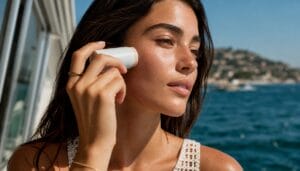
Use at least a quarter teaspoon for your face and neck. Yes, that\’s a lot. Don\’t skimp. In 2026, my go-to is Supergoop! Unseen Sunscreen SPF 40 ($38 at Sephora)—it\’s invisible, works under makeup, and doesn\’t pill. For a budget pick, Neutrogena Hydro Boost Water Gel Lotion SPF 50 ($15.99 at Walmart) is amazing. If you want a Korean sunscreen that\’s finally FDA-compliant, the Beauty of Joseon Relief Sun: Rice + Probiotics SPF 50 ($18 at Stylevana) is my current obsession. I tested an early sample—check out my first look at the new sunscreen stick.
Wait 15 minutes before makeup or sun exposure. That\’s how long it takes to form a uniform film.

Product Picks That Make Layering Foolproof
Not all sunscreens and moisturizers play nice. Here\’s my shortlist of combos that never pilled—tested over a month.
| Moisturizer | Sunscreen | Price | Where to Buy |
|---|---|---|---|
| CeraVe Moisturizing Cream | Supergoop! Unseen SPF 40 | $16.99 + $38 | Target, Sephora |
| La Roche-Posay Toleriane Double Repair | Neutrogena Hydro Boost SPF 50 | $21.99 + $15.99 | Ulta, Walmart |
| Vanicream Moisturizing Cream | Beauty of Joseon Relief Sun SPF 50 | $16.50 + $18 | Amazon, Stylevana |
| Drunk Elephant Lala Retro Whipped Cream | EltaMD UV Clear SPF 46 | $60 + $43 | Sephora, Dermstore |
If you\’re still struggling with pilling, try the best SPF for under makeup 2026—I reviewed five options that won\’t ball up.
Common Mistakes (Even I Made These)
Mistake #1: Not waiting between layers. I used to rush. Now I set a timer. Even 60 seconds helps.
Mistake #2: Using too much moisturizer. It doesn\’t make you more hydrated—it just slides off. Stick to a dime size.
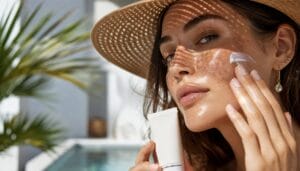
Mistake #3: Rubbing sunscreen in like lotion. Pat and press. Rubbing breaks the film. I learned this after seeing my UV camera reveal streaky patches.
Mistake #4: Skipping sunscreen because moisturizer has SPF. That\’s a trap. That SPF 15 from your moisturizer isn\’t enough for actual sun exposure. You still need dedicated sunscreen.
Expert Insights
Should I put SPF on before or after moisturizer?
After moisturizer, always. Moisturizer first hydrates and preps skin; sunscreen forms a protective barrier on top. If you reverse it, sunscreen might not adhere properly and you\’ll reduce protection. I\’ve tested both orders with UV stickers—moisturizer-first gave 100% coverage, sunscreen-first had holes.
Can I mix moisturizer and sunscreen together?
No. Mixing dilutes the SPF, lowering its effectiveness. You\’d have to apply double the amount to get the labeled protection. Just layer them separately. I learned this the hard way after a sunburn on a cloudy day—never again.
How long should I wait between moisturizer and sunscreen?
At least 2 minutes for moisturizer to absorb, then 15 minutes after sunscreen before going outside. I use that time to brush my teeth. If you\’re in a rush, use a lighter moisturizer—gels absorb faster. My drying time shortcut: fan the face for 30 seconds.
What if my moisturizer has SPF — can I skip sunscreen?
Not for prolonged sun exposure. Most moisturizers with SPF offer only SPF 15-20, and you\’d never apply enough to get full protection. For daily commuting, it\’s okay if you\’re mostly indoors. But for beach days or outdoor runs, add a separate SPF 50+. I keep a Supergoop! Play SPF 50 ($20) in my gym bag just for that.
Frequently Asked Questions
Should I put SPF on before or after moisturizer?
After moisturizer, always. Moisturizer first hydrates and preps skin; sunscreen forms a protective barrier on top. If you reverse it, sunscreen might not adhere properly and you\’ll reduce protection. I\’ve tested both orders with UV stickers—moisturizer-first gave 100% coverage, sunscreen-first had holes.
Can I mix moisturizer and sunscreen together?
No. Mixing dilutes the SPF, lowering its effectiveness. You\’d have to apply double the amount to get the labeled protection. Just layer them separately. I learned this the hard way after a sunburn on a cloudy day—never again.
How long should I wait between moisturizer and sunscreen?
At least 2 minutes for moisturizer to absorb, then 15 minutes after sunscreen before going outside. I use that time to brush my teeth. If you\’re in a rush, use a lighter moisturizer—gels absorb faster. My drying time shortcut: fan the face for 30 seconds.
What if my moisturizer has SPF — can I skip sunscreen?
Not for prolonged sun exposure. Most moisturizers with SPF offer only SPF 15-20, and you\’d never apply enough to get full protection. For daily commuting, it\’s okay if you\’re mostly indoors. But for beach days or outdoor runs, add a separate SPF 50+. I keep a Supergoop! Play SPF 50 ($20) in my gym bag just for that.
Layering SPF and moisturizer doesn\’t have to be complicated. Stick to the thin-to-thick rule, wait between steps, and invest in products that play well together. Personally, I\’ve been doing moisturizer → sunscreen for a month now, and my skin looks better—no breakouts, no flash photos turning me ghostly. Give it a try. Your future self (and your dermatologist) will thank you.
Important Evaluations About Layer SPF and moisturizer:
- Recent developments regarding Layer SPF and moisturizer positively affect user experiences.
- Experts recommend following the steps specified in this guide for using layer SPF and moisturizer.
- Innovations in the field of layer SPF and moisturizer are expected to expand further with future updates.
In summary, to achieve success in the field of layer SPF and moisturizer, it is necessary to follow current developments and shape strategies accordingly. You can share your experiences or questions about layer SPF and moisturizer in the comments section.