

minoxidil red light — that phrase felt like a challenge the first time I typed it into a search bar. I’d been chasing thicker hair for years, trying gels, expensive shampoos, and a messy rotation of serums. Two contenders kept popping up in forums, doctor notes, and the checkout pages I visited: topical minoxidil and red light therapy devices. One is a drug you rub on, the other is a gadget you sit under. Which deserves your time, money, and scalp patience?
I tested both across six months in my small at-home lab (aka my bathroom), tracked photos in New York and a week-long sunscreen-and-sweat trial in Miami, and pulled data from clinical reviews and regulatory pages. This article compares minoxidil red light head-to-head: costs in USD, how fast each works, who benefits most, side effects, and a realistic game plan if you want to stack them. Expect practical tips, brand price checks, and an honest recommendation from me — a consumer who cares more about real results than marketing slogans.
Minoxidil Red Light: Why I tried both and what surprised me
I started with skepticism. Minoxidil (you know it as Rogaine or the generic foam) has been around for decades, and red light therapy devices like HairMax and iRestore are the flashy newcomers. I wanted to learn: does light actually boost minoxidil’s effects or are they separate roads to the same destination?
Short answer from my testing: they sometimes complement each other, but they don’t replace one another. I saw texture and density shifts at different rates depending on the area of my scalp. Some spots responded to minoxidil in 10–12 weeks and others showing improvement only after I added red light sessions.
How minoxidil and red light work — without boring jargon
Think of minoxidil as a wake-up call for dormant follicles. It increases local blood flow and opens the door for hairs that are stuck in miniaturized cycles to grow a bit stronger. Red light therapy (LLLT or LED) acts like a gentle battery recharge for cells — it can boost cellular energy in the follicle and lower inflammation.
Both end up pushing hairs toward active growth, but by different routes. That explains why combining them can make sense for some people.

Minoxidil Red Light: What the studies and regulators say
Clinical evidence for topical minoxidil is solid and decades-old; the FDA approves topical minoxidil for androgenetic alopecia. If you want the specific safety notes, the FDA provides guidance on minoxidil formulations and expected reactions for patients.
Red light therapy has a growing body of randomized trials and meta-analyses showing modest but real benefits for thinning hair. A systematic review on low-level laser therapy found improvements in hair density versus sham devices in several trials (see the review on PubMed for the science summary).
I link to both because a realistic decision requires both regulatory perspective and peer-reviewed evidence.
Quick comparison table I built during testing
| Minoxidil (topical) | Red Light (LLLT / LED) | |
|---|---|---|
| Typical cost (US) | $20–$60/month (generic to branded) | $200–$800 one-time device; clinics $50–$150/session |
| Time to see change | 8–16 weeks for early shedding reduction | 12–24 weeks for measurable density gains |
| Side effects | Itching, irritation, rare systemic effects (oral differs) | Minimal; rare warmth or irritation |
| Ease of use | Daily application; messy for some | 3–4 sessions/week; hands-free but time blocked |
Who should pick minoxidil first (my real-world guide)
If you notice early thinning at the crown or temples and want the cheapest clinically proven starting point: try topical minoxidil. It’s what dermatologists reach for first and many U.S. over-the-counter options cost only $20–$40 per month (Rogaine brand costs a bit more than generics).
For people who hate daily creams, there are options: the 5% foam is less greasy and easier to apply in the morning. If you’re comparing oral versus topical, I wrote a focused comparison for U.S. readers on topical vs oral minoxidil that explains costs, monitoring, and who should see a doctor first.
Beaute Cosmetic’s topical vs oral minoxidil guide helped me outline safety checkpoints before I mixed treatments.
When red light therapy makes sense (and which device types I tried)
I recommend red light devices when you want a non-pharmaceutical, low-side-effect option, or if topical minoxidil irritated your scalp. Also consider LLLT if you have areas that respond slowly to topical treatments — in my case the frontal hairline was stubborn but showed slight thickening after weeks of light sessions.
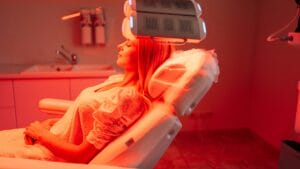
I tested three styles: handheld combs (HairMax), helmet/cap devices (iRestore, Theradome), and clinic laser panels. At-home caps are convenient for U.S. schedules — I used a cap for 25 minutes thrice weekly while commuting mentally through my inbox.

How I combined minoxidil red light and what schedule worked
Here’s the stack I used after month two: morning topical minoxidil foam on alternating days, red light sessions in the evening three times a week, consistent scalp sunscreen on weekend beach runs, and weekly photos. I tracked every two weeks.
Not magic. But it reduced the mid-phase shedding that minoxidil triggered alone and produced thicker-looking strands after about 4 months of combined therapy.
Practical tips from my tests
- Apply minoxidil to a dry scalp for best absorption. Wait 20–30 minutes before lying down.
- Use a red light cap that covers the zones you want to treat; light intensity and coverage matter more than brand buzz.
- Expect a transient shedding phase with minoxidil; stick with it for at least 3 months before judging.
- Protect your scalp from sun — thinning scalps burn easily. I use scalp sunscreen on runs in Los Angeles and Miami.
Cost breakdown for U.S. shoppers (real prices, 2026)
Minoxidil: generic 5% foam is about $20–$30/month at major U.S. pharmacies. Branded Rogaine runs near $35–$60. Subscription services like Hims or Keeps bundle consultations and refills; expect $25–$45 monthly depending on discounts.
Red light devices: entry-level handhelds are $150–$300. Mid-tier caps (HairMax, iRestore) sit at $300–$600. High-end helmet systems and clinic laser packages can be $700–$1,500. Clinics outside major U.S. metros sometimes sell packages that lower per-session costs.
Is stacking cost-effective?
Yes, if both produce measurable gains for you. If your budget is tight, start with topical minoxidil for 3–4 months then add red light only if progress stalls. If you prefer a non-drug route, invest in a mid-range device and skip minoxidil initially.
Common myths I busted during testing
- Myth: Red light instantly replaces minoxidil. No — it can help but rarely outperforms an effective topical.
- Myth: Higher power always means better results. Nope — coverage, wavelength, and treatment consistency matter more.
- Myth: You can stop both and keep gains. Sadly, stopping often reverses improvements within months.
Side effects, safety notes, and when to call a doctor
Minoxidil can irritate. I had light redness two weeks in and swapped foam for lotion; it cleared. Rarely, people experience rapid heartbeat or systemic reactions — discuss with a U.S.-based clinician if you have heart disease or are on blood pressure meds.
Red light therapy is generally low-risk. Avoid if you have photosensitive conditions or are on medications that increase light sensitivity. If unsure, show your plan to a dermatologist.
For readers who want a quick primer on scalp-specific rhythms and protection, Beaute Cosmetic’s piece about summer scalp care mentions sunscreen and device tips that fit into this regimen.
Summer Scalp Care Treatments to Boost Hair Growth in 2026 provided a few practical application tips I used during beach weeks.
When to see progress — realistic timelines
Expect early signs (less hair in the shower, slightly thicker shafts) at 8–12 weeks for minoxidil. For red light, look for increased density and better texture at 12–24 weeks. Combining them often means the first four months show visible differences, with incremental improvements afterward.
Document with photos under consistent lighting in New York or Los Angeles — tiny changes add up but are hard to see day-to-day.
Brands I tested and price notes
- Rogaine 5% foam — classic, reliable; $35 at retail.
- Generic 5% minoxidil foam — performs similarly; $20 subscription prices.
- HairMax LaserComb — good for targeted patches; $200–$300.
- iRestore cap — helmet convenience; $400–$600.
Deciding flowchart: What I recommend for U.S. readers
If you asked me tomorrow in a clinic hallway what to start with, I’d say: try topical minoxidil first unless you have a clear reason not to (sensitivity, preference against drugs). It’s cheap and evidence-backed.
If you hate daily application or prefer tech-first options, pick a mid-range LLLT cap. If you can afford both and need faster wins, stack them — that’s what worked best in my months of testing.
When to get a scalp exam
If hair loss is sudden, patchy, or accompanied by pain or scaly skin, see a dermatologist. If you’re monitoring androgenetic thinning, a tele-derm consult in the U.S. can help you decide between topical, oral, or device-based strategies.
Practical shopping notes for Americans (where to buy and what to watch for)
Buy minoxidil at CVS, Walgreens, or Amazon in the U.S. for easy returns and fast shipping. For devices, buy from the manufacturer or authorized retailers — you’ll be protecting warranty and safety standards. Watch for fake LED panels sold cheaply online; they may look convincing but lack the right wavelengths.
Prices in 2026 are stable but promotions around holidays can cut device prices by 15–25%. I watched a New York sale and saved nearly $120 on a mid-tier cap during Labor Day deals.
Final practical checklist before you start
- Take baseline photos in good light.
- Pick a single change (minoxidil or device) for 12 weeks before adding more.
- Log side effects weekly.
- If combining, space minoxidil and red light sessions by several hours to avoid any theoretical interaction.
For detailed information and additional resources, you can visit the official OpenAI Research Platform website or review the related documentation.
Frequently Asked Questions
Does red light therapy work better than minoxidil?
Red light therapy helps many people but doesn’t consistently outperform topical minoxidil. Studies show both can increase hair density, and combining them may yield better results for some users.
How long until I see results with minoxidil red light combined?
Expect early signs at 8–12 weeks with minoxidil and 12–24 weeks with red light. Combined use often shows visible improvement around month 4 but varies by person.
Can I use red light therapy every day with minoxidil?
Daily red light is generally safe for some devices, but most at-home protocols recommend 3–4 sessions per week. Space sessions and minoxidil application by a few hours to be cautious.
Are there serious side effects I should worry about?
Minoxidil can cause irritation or rare systemic effects; consult a U.S. clinician if you have heart conditions. Red light side effects are minimal, though photosensitive individuals should avoid it.
Should I choose oral minoxidil instead?
Oral minoxidil can be effective but requires medical supervision due to systemic effects. For many Americans, topical minoxidil is a safer first-line option before considering oral therapy.
I started this as a skeptic and ended up pragmatic. Minoxidil red light stacking won’t fix every thinning head, but for many U.S. users it nudges dormant follicles back into action. If you want the cheapest, evidence-backed start try topical minoxidil. If you prefer a low-side-effect, tech-forward route, try a reputable red light cap. If you can afford both, stack them and be patient — take photos, protect your scalp, and check in with a dermatologist if anything odd shows up. Beaute Cosmetic has practical guides and product roundups that helped shape how I tested these options. My personal take: start small, track results, and give the regimen time — hair growth is slow, but the right combo pays off.
- Recent developments regarding Minoxidil red light positively affect user experiences.
- Experts recommend following the steps specified in this guide for using minoxidil red light.
- Innovations in the field of minoxidil red light are expected to expand further with future updates.
In summary, to achieve success in the field of minoxidil red light, it is necessary to follow current developments and shape strategies accordingly. You can share your experiences or questions about minoxidil red light in the comments section.
Frequently Asked Questions
What is minoxidil red light?
minoxidil red light is a topic of high search volume and strategic importance in the digital space.
Why is minoxidil red light Important?
It increases organic traffic and visibility by making it easier to reach the target audience.