
minoxidil vs red light therapy konusunda Minoxidil vs Red Light Therapy for Hair Growth: 2026 Guide hakkında hazırladığımız bu rehberde tüm detayları bulacaksınız.
Hair loss affects millions of Americans, leading many to seek effective solutions. Two of the most popular evidence-based treatments are minoxidil and red light therapy (also known as low-level laser therapy, LLLT). But when it comes to minoxidil vs red light therapy, which option actually works best for regrowing hair? This 2026 guide from Beaute Cosmetic breaks down the science, costs, and real-world results of each, helping you make an informed decision for your hair restoration journey.
Understanding Minoxidil for Hair Growth
Minoxidil is a vasodilator originally developed as an oral blood pressure medication. When applied topically as a foam or solution, it widens blood vessels in the scalp, improving nutrient and oxygen delivery to hair follicles. This stimulates the hair growth phase (anagen) and prolongs it, leading to thicker, denser hair over time. Minoxidil is FDA-approved for androgenetic alopecia (male and female pattern baldness) and is available over-the-counter under brands like Rogaine. According to a 2014 study in the Journal of the American Academy of Dermatology, topical minoxidil 5% is effective in increasing hair count in both men and women after 16 to 48 weeks of use.
Minoxidil works best on the crown and vertex of the scalp. It is less effective for frontal recession in men. Users typically see initial shedding within 2–6 weeks as old hairs are pushed out, followed by regrowth after 4–6 months. Consistency is key: missing applications can halt progress. Side effects include scalp irritation, dryness, and unwanted facial hair growth if drips reach other areas.
For those considering oral minoxidil, our detailed comparison of oral vs topical minoxidil provides deeper insights into efficacy and safety.
How Red Light Therapy Works for Hair Regrowth
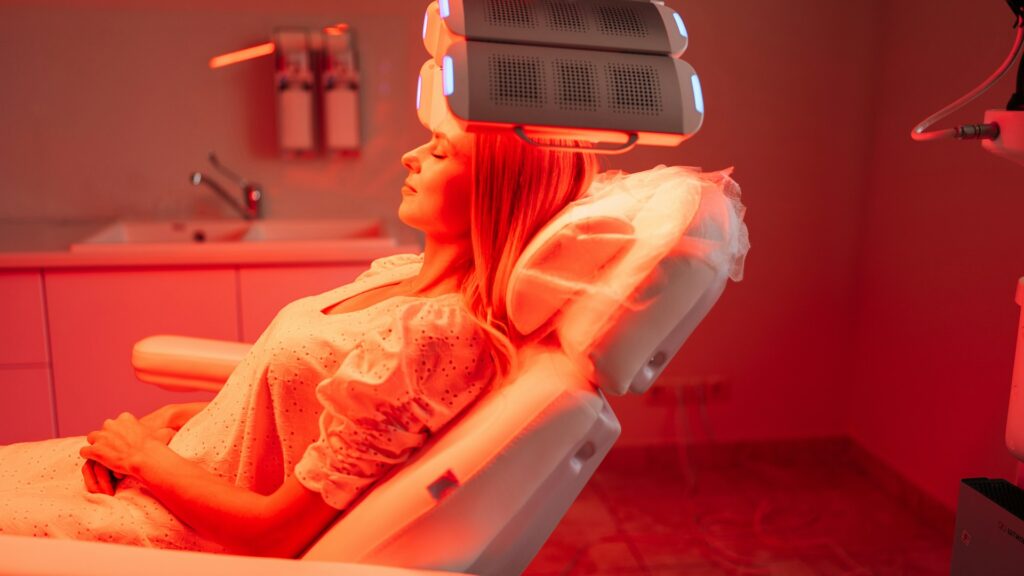
Red light therapy employs specific wavelengths (typically 630–670 nm) to penetrate the scalp and energize mitochondria in hair follicle cells. This boosts ATP production, reduces inflammation, and stimulates cellular repair, ultimately promoting hair growth. The therapy is FDA-cleared for hair regrowth in both men and women, with devices like laser caps, combs, and helmets available for home use. Common brands include iRestore, HairMax, and Capillus.
A 2013 meta-analysis in Lasers in Surgery and Medicine concluded that LLLT significantly increases hair density in patients with androgenetic alopecia. Sessions typically last 15–30 minutes, 3–4 times per week. Side effects are minimal—occasional mild warmth or tingling—and it’s painless. However, results take time: noticeable improvements appear after 3–6 months of consistent use.

Minoxidil vs Red Light Therapy: Key Differences
While both treatments aim to combat hair loss, their mechanisms, convenience, and costs differ significantly. Below is a head-to-head comparison.
| Feature | Minoxidil (Topical) | Red Light Therapy |
|---|---|---|
| Mechanism | Vasodilation, increases blood flow | Photobiomodulation, boosts ATP |
| FDA Status | FDA-approved | FDA-cleared |
| Best for | Crown/vertex thinning | Generalized thinning, early-stage loss |
| Usage | Apply twice daily (foam or solution) | Use device 15–30 min, 3–4x/week |
| Onset of Results | 4–6 months | 3–6 months |
| Common Side Effects | Scalp irritation, initial shedding, unwanted hair | Mild warmth, temporary redness (rare) |
| Long-term Commitment | Must continue indefinitely | Maintenance sessions recommended |
| Average Cost (annual) | $120–$250 | $300–$1,500 (device purchase) |
As the table shows, minoxidil is cheaper upfront but requires daily commitment. Red light therapy involves a higher initial investment but offers a hands-off, no-chemical alternative.
Benefits and Risks of Each Treatment
Benefits of Minoxidil
- Proven track record with decades of research
- Low cost and widely accessible
- Available in different strengths and formulations
Risks of Minoxidil
- Scalp irritation and contact dermatitis
- Unwanted facial hair growth if misapplied
- Requires consistent, indefinite use—stopping leads to hair loss reversal
Benefits of Red Light Therapy
- Non-invasive and painless
- No chemicals, minimal side effects
- Can be used in conjunction with other treatments
Risks of Red Light Therapy
- High upfront cost for quality devices
- Time commitment for sessions
- Not effective for advanced baldness (Norwood 5+)

Combining Minoxidil and Red Light Therapy
Many experts suggest that combining both treatments may yield synergistic effects. Since minoxidil improves blood flow and LLLT boosts cellular energy, together they address different aspects of follicular health. A 2019 study in Dermatologic Surgery found that patients using both minoxidil 5% and LLLT showed greater hair growth than either treatment alone. However, always consult a dermatologist before starting any combination therapy.
For best results, apply minoxidil first, wait for it to dry, then use the LLLT device. This prevents any potential interference. Remember that consistency and patience are crucial—hair cycles take months.
Choosing the Right Treatment for Your Hair Loss
Your choice depends on factors like hair loss pattern, budget, lifestyle, and medical history. Consider the following:
- Pattern baldness on crown: Minoxidil is first-line therapy.
- Generalized thinning or early-stage loss: Red light therapy can be very effective.
- Preference for drug-free treatment: LLLT is a great alternative.
- Budget: Minoxidil is cheaper long-term.
- Side effects: If you have sensitive skin, try LLLT first.
For additional reading, our guide on scalp serums for hair growth in 2026 explores complementary topical treatments.
Expert Insight: The Future of Hair Regrowth
As an editorial perspective, Beaute Cosmetic believes that the ideal hair loss management plan is personalized. While minoxidil remains the gold standard for proven efficacy, red light therapy offers a safe, non-pharmaceutical option that appeals to many. Emerging research into combining both modalities suggests we may see more integrated treatment protocols. Always consult a board-certified dermatologist for a tailored approach—what works for your friend may not work for you.
Common Mistakes to Avoid
- Expecting overnight results—hair growth takes months.
- Discontinuing treatment prematurely due to initial shedding.
- Using red light therapy devices not FDA-cleared.
- Applying minoxidil to wet hair, diluting effectiveness.
- Skipping application days with minoxidil.
Best Practices for Maximum Results
- Stick to a consistent schedule for either treatment.
- Follow instructions: minoxidil on dry scalp, LLLT at the same time daily.
- Take progress photos under consistent lighting to monitor changes.
- Pair with a healthy diet, adequate sleep, and stress management.
- Combine with other evidence-based treatments like finasteride (after consulting your doctor).
In summary, both minoxidil and red light therapy are effective tools for hair regrowth. Your decision should be based on personal preferences, budget, and medical advice. At Beaute Cosmetic, we encourage you to explore all options and find the right fit for your hair restoration journey.
Sıkça Sorulan Sorular
Is minoxidil or red light therapy more effective for hair growth?
Both are effective, but minoxidil has stronger clinical evidence for stimulating regrowth, especially on the crown. Red light therapy is a great non-chemical alternative for early thinning. Combination therapy often yields the best results.
Can I use minoxidil and red light therapy together?
Yes, studies show combining both can enhance hair growth. Apply minoxidil first, allow it to dry, then use your red light therapy device. Always consult a dermatologist before starting any combined regimen.
How long does it take to see results from red light therapy?
Most users notice improvements after 3 to 6 months of consistent use. Patience is key, as hair growth cycles are slow. Continue sessions as recommended, typically 3–4 times per week.
Does red light therapy work for receding hairlines?
Red light therapy is most effective on the crown and top of the scalp. It may help mild frontal thinning, but for significant receding hairlines, minoxidil or other treatments like finasteride might be more effective.
What are the side effects of minoxidil?
Common side effects include scalp irritation, dryness, itching, and temporary increased shedding in the first few weeks. Some users experience unwanted facial hair growth if the solution drips onto the face. Oral minoxidil may cause dizziness or fluid retention.
Is red light therapy FDA-approved?
Red light therapy devices are FDA-cleared, not approved. FDA clearance indicates the device is considered safe and effective when used as directed, similar to other low-risk medical devices.
Which is more affordable: minoxidil or red light therapy?
Minoxidil is more affordable in the short term, costing about $120–250 per year. Red light therapy requires an upfront investment of $300–$1,500 for a quality device, but no recurring product costs after purchase.
Can red light therapy regrow hair on a bald spot?
Red light therapy is most effective for areas with dormant follicles, such as thinning regions. For completely bald spots (e.g., Norwood 5+), it is unlikely to regrow hair. Other options like hair transplant may be considered.
In the battle of minoxidil vs red light therapy, there is no single winner—both have proven merits for hair regrowth. Minoxidil offers reliable, cost-effective results for crown thinning, while red light therapy provides a drug-free, low-side-effect alternative for diffuse hair loss. The best approach often involves a combination tailored to your specific needs. At Beaute Cosmetic, we recommend consulting a hair specialist to develop a personalized plan. Start your journey today and take control of your hair health with informed choices.
- Minoxidil vs red light therapy ile ilgili son gelişmeler, kullanıcı deneyimlerini olumlu yönde etkilemektedir.
- Uzmanlar, minoxidil vs red light therapy kullanımında bu rehberde belirtilen adımların takip edilmesini önermektedir.
- Gelecek güncellemelerle birlikte minoxidil vs red light therapy alanındaki yeniliklerin daha da genişlemesi bekleniyor.