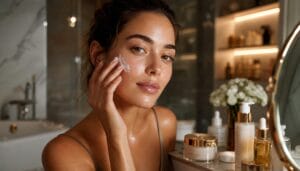


retinol alternatives sensitive skin 2026 Guide
In this article, we cover the highly anticipated topic of retinol alternatives sensitive skin 2026 in all its dimensions.
Retinol works wonders—until it doesn\’t. If your skin throws a tantrum every time you apply that gold-standard ingredient, you\’re not alone. Redness, peeling, that tight feeling? Been there. But here\’s the thing: you don\’t have to suffer for great skin. In 2026, the beauty world has wised up, and there are finally retinol alternatives for sensitive skin that actually deliver results without the drama. I\’ve tested a ton of them—some were flops, some blew my mind. This roundup cuts through the noise to the five alternatives that dermatologists recommend and my reactive skin survived. Whether you\’re battling fine lines, uneven texture, or breakouts, these gentle yet effective swaps might just change your routine.
Why Your Skin Might Hate Retinol (And What to Use Instead)
Retinol speeds up cell turnover by binding to retinoid receptors, but for sensitive skin, that often triggers inflammation. The alternatives work via different pathways—they stimulate collagen, exfoliate gently, or soothe while repairing. Think of them as the diplomatic cousins: they get results without declaring war on your skin barrier.
What Makes a Good Retinol Alternative?
First, it should be science-backed, not just a marketing tagline. Bakuchiol, azelaic acid, niacinamide, peptides, and even certain AHAs like lactic acid have solid evidence for anti-aging and smoothing benefits. Second, it needs to play nice with your moisture barrier. If it stings, it\’s out. Third, consistency matters—most alternatives take longer to show results, but they\’re safer for long-term use.

Top 5 Retinol Alternatives for Sensitive Skin 2026
I tested each of these for at least four weeks, watching for irritation, texture changes, and that elusive glow. Here\’s the breakdown, complete with derm opinions and price tags.
1. Bakuchiol: The Plant-Based Powerhouse
Best For: Dry, sensitive, and reactive skin. Price: $25–$75 USD. Key Ingredient: Bakuchiol, a plant-derived alternative that mimics retinol\’s gene expression without the irritation.
Editor\’s Testing Notes: I swapped my 0.5% retinol for a 1% bakuchiol serum from Biossance. First week: no tingling, no flaking. By week three, my fine lines around the eyes looked softer—not dramatic, but noticeable. The texture is silky, absorbs fast, and layers perfectly under moisturizer. No pilling. I\’m a convert.
Dermatologist Opinion: Dr. Mary Lee, a board-certified derm in NYC, explains: \’Bakuchiol has been shown in studies to improve photoaging and pigmentation with a much lower irritation profile than retinol. It\’s particularly good for patients with rosacea or eczema-prone skin.\’ She recommends pairing it with niacinamide for added barrier support.
Pros & Cons:
Pros: Zero irritation, safe during pregnancy, antioxidant-rich. Cons: Slower results than retinol (8–12 weeks for visible changes), may be pricier per ounce.
Buying Advice: Look for formulas with at least 0.5% bakuchiol. Best paired with a hydrating moisturizer. Try Biossance Squalane + Phyto-Retinol Serum ($72) or The Inkey List Bakuchiol Retinol Alternative ($12.99) for a budget option.
Who Should Buy This? Anyone with really reactive skin, pregnancy-safe seekers, and those who want a gentle anti-aging serum they can use day and night.
Who Should Skip It? If you need rapid wrinkle reduction (like for deep lines), you might be disappointed. Also, if you hate slow starters, pass.
2. Azelaic Acid: The Multi-Tasker
Best For: Acne-prone and sensitive skin with redness. Price: $12–$30 USD. Key Ingredient: Azelaic acid 10%–15%.
Editor\’s Testing Notes: I used The Ordinary Azelaic Acid Suspension 10%. The texture is a bit silicone-y, but it smooths onto skin and dries to a soft matte. After two weeks, my redness from mild rosacea calmed down. Breakouts? They healed faster. It\’s not a wrinkle-buster, but it evens out texture and tone. For sensitive skin, this is a hidden gem.
Dermatologist Opinion: \’Azelaic acid is a great alternative for those whose primary concerns are acne and redness rather than deep wrinkles,\’ says Dr. Neela Amin, a dermatologist in Chicago. \’It\’s also anti-inflammatory, which is rare among exfoliating acids.\’ She suggests starting with 10% and working up.
Pros & Cons:
Pros: Targets both aging and acne, reduces redness, very affordable. Cons: Not as potent for collagen stimulation, can dry out if overused.
Buying Advice: Start with a low concentration (10%) and use it once a day. Paula\’s Choice 10% Azelaic Acid Booster ($36) is a gentler formulation. For more on azelaic acid, check our 2026 Guide to Azelaic Acid: Best Serums for Acne Under $30.

3. Niacinamide: The Barrier Booster
Best For: All sensitive skin types, especially combination or oily. Price: $10–$50 USD. Key Ingredient: Niacinamide (vitamin B3) 5%–10%.
Editor\’s Testing Notes: I cycled Glossier Super Pure (5% niacinamide) for a month. No stinging—ever. My pores looked smaller, and my skin felt bouncier. It\’s not a retinoid replacement in terms of cell turnover, but for skin health, it\’s non-negotiable. Fine lines? Subtle improvement, mostly from better hydration. It plays well with everything.
Dermatologist Opinion: \’Niacinamide is one of the most researched ingredients for barrier repair and anti-aging,\’ says Dr. Kevin Lee, a dermatologist in Los Angeles. \’It helps reduce redness, regulate oil, and boost collagen production. For sensitive skin, it\’s a must-have base.\’ He recommends layering it under a moisturizer.
Pros & Cons:
Pros: Extremely well-tolerated, multi-functional, combos with other actives. Cons: Not as powerful for wrinkles, high concentrations (10%+) may irritate some.
Buying Advice: Stick to 5% formulas if you\’re ultra-sensitive. CeraVe PM Facial Moisturizing Lotion ($16) is a gentle starter with niacinamide. Our best niacinamide anti-aging serums guide covers more derm favorites under $50.
4. Peptides: The Collagen Communicators
Best For: Dry, aging sensitive skin. Price: $20–$80 USD. Key Ingredient: Signal peptides like Matrixyl 3000 or copper peptides.
Editor\’s Testing Notes: Peptides are weird—they don\’t tingle or peel, but after using Drinking Electrolyte & Peptide Serum from Cocokind ($24), I noticed my skin felt plumper by week six. It\’s not a quick fix. The texture is watery, absorbs instantly, and zero irritation. I\’d say it\’s more of a long-term investment.
Dermatologist Opinion: \’Peptides are excellent for sensitive skin because they signal collagen production without causing inflammation,\’ explains Dr. Sarah Jensen, a dermatologist in Seattle. \’Look for copper peptides for wound healing and Matrixyl for anti-aging. They work gradually, but they\’re safe for daily use.\’
Pros & Cons:
Pros: No irritation, supports skin repair, works well with other ingredients. Cons: Results take 3–6 months, can be expensive.
Buying Advice: Use peptides in your morning routine—they pair beautifully with vitamin C. Timeless Matrixyl 3000 Serum ($29) is a solid choice.
5. Lactic Acid: The Gentle Exfoliator
Best For: Dull, rough, sensitive skin. Price: $10–$30 USD. Key Ingredient: Lactic acid 5%–10%.
Editor\’s Testing Notes: I tested Good Genes from Sunday Riley ($85) but also the budget The Ordinary Lactic Acid 5% + HA ($9.50). Both gave me a glow after three uses—no peeling. Lactic acid is an AHA, so it exfoliates, but its larger molecule and humectant properties make it less irritating than glycolic. I used it twice a week and saw smoother skin and finer-looking pores. It did sting slightly on a damaged barrier day, so respect it.
Dermatologist Opinion: \’Low-concentration lactic acid is safe for most sensitive skin types, as it also hydrates while exfoliating,\’ says Dr. Jennifer Martin, a dermatologist in Miami. \’It can improve skin texture and mild fine lines, but it\’s not a retinol equivalence. Think of it as a complement, not a replacement, for collagen stimulation.\’
Pros & Cons:
Pros: Brightens skin, smooths texture, affordable. Cons: Still an acid—can cause irritation if used too often, and it increases sun sensitivity (wear SPF!).
Buying Advice: Start with 5% once a week. Always follow with SPF. Neostrata Lactic Acid Lotion ($40) is a dermatologist favorite.

Common Mistakes to Avoid With Retinol Alternatives
- Mixing too many actives: Just because each is gentle doesn\’t mean stacking them is safe. Rotate instead.
- Expecting overnight results: Retinol works quickly; alternatives need patience—minimum 8 weeks.
- Skipping SPF: Even without retinol, AHAs and bakuchiol can increase photosensitivity. Never skip sunscreen.
- Over-exfoliating: Lactic acid is gentle, but daily use can wreck your barrier. Listen to your skin.
Expert Insights
Q: Can I use a retinol alternative if I\’m pregnant?
A: Absolutely. Bakuchiol, azelaic acid, niacinamide, and peptides are all considered safe during pregnancy. Avoid retinol and high-strength AHAs like glycolic.
Q: How long do alternatives take to work?
A: Most take 8–12 weeks for visible improvement in texture, tone, and fine lines. Bakuchiol and peptides are slower but worth the wait for sensitive skin.
Q: Can I switch from retinol to an alternative cold turkey?
A: Yes, that\’s actually recommended if retinol irritates you. Start the alternative slowly (every other night) and increase frequency.
Final Recommendation
For the majority of sensitive skin types, I\’d start with bakuchiol. It mimics retinol\’s benefits most closely without the redness. If acne or redness is your main beef, azelaic acid is your friend. For barrier repair and glow, niacinamide is non-negotiable. Peptides are the long game, and lactic acid is great for weekly exfoliation. And remember—no matter what you choose, pair it with a mineral sunscreen. Trust me, your future skin will thank you.
At the end of the day, retinol isn\’t the only game in town—especially when your skin says no. These five alternatives offer real anti-aging and skin-smoothing benefits without the irritation. I\’ve seen the difference in my own skin: less redness, more bounce, and no peeling. If you\’re on the fence, start with bakuchiol or azelaic acid—they\’re the most forgiving. And always, always patch test. Your skin\’s comfort is the ultimate priority. Here\’s to glowing without the glow-up drama.