
I used to think glass skin was a filter trick—until a trip to Seoul and a very stubborn combination skin taught me otherwise. Korean skincare changed how I think about layering: small doses, frequent hydration, and gentle actives rather than one big serum that promises the moon. The phrase “Korean skincare” shows up in every beauty chat in NYC, LA, and Chicago for a reason—people see results that read as skin health, not makeup.
For U.S. readers, this routine balances drugstore realities (yes, you can get great products at Target and Ulta for $10–$40) with select splurges I tested in Miami and San Francisco. I’ll walk you through the exact morning and night sequence I use to get a glass-like, translucent glow without irritation, including product types, price ranges in USD, and tips for sensitive or acne-prone skin.
Why Korean skincare still makes glass skin possible
If you imagine “glass skin” as glossy makeup, stop. Real glass skin is about surface hydration, minimized texture, and a soft-focus sheen—skin that reads healthy and well-cared-for under natural light. I call it the hydration riff: layer light, hydrating products repeatedly until the skin holds a subtle glow.
Korean skincare emphasizes fewer aggressive steps and more gentle repetition. That method works especially well in U.S. city climates where indoor heating and air conditioning dry the face out fast.
My 10-step Korean skincare routine for glass skin
I kept the format familiar but pragmatic: morning and night sequences, with optional steps for once or twice a week. Follow the order; layering matters more than the brand. I’ll give price bands (budget, mid, splurge) and U.S.-friendly shopping tips.

Start with smart cleansing — not over-cleansing
Step 1: Double cleanse at night; single mild cleanse in the morning. I use an oil or balm to remove sunscreen and makeup, followed by a gentle water-based cleanser. For daytime, a low-foam gel that rinses clean is enough.
- Budget: $8–$18 — look for minimal fragrance and pH-balanced formulas.
- Mid: $20–$40 — lightweight gels or milky creams that leave a hint of moisture.
Toner vs hydrating toner — pick a hydration base
Step 2: Hydrating toner (not astringent) to reset pH and add a first layer of moisture. Think of this as a primer for subsequent layers—pat it in, don’t rub.
Essence: the ingredient that changes everything
Step 3: Essences are thin, viscous liquids loaded with humectants and sometimes light actives. They are a staple in Korean skincare because they provide consistent, lightweight hydration. I like to apply three to six gentle taps of essence, then wait 15–30 seconds.
Serums and targeted actives (yes, selectivity matters)
Step 4: Use a brightening serum or niacinamide in the morning and a retinoid or bakuchiol alternative at night. When I tested L-ascorbic acid serums in the U.S., I paired them with a stable formula and an antioxidant-rich moisturizer to reduce sting—if you want my picks and layering tips I detailed them in my roundup of Vitamin C serums nasıldır – 2026 Vitamin C Serums.
Pro tip: if you have sensitive skin, try bakuchiol as a gentler retinol alternative two nights a week first.
Sheet masks and boosters — weekly power-ups
Step 5: Sheet masks are not just indulgence. A 20-minute sheet can rapidly increase surface hydration. In the U.S., you can find effective sheet masks for $3–$8 each or buy a pack for better value.
Moisturizer: lock the work in
Step 6: Use a lightweight gel-cream in summer and richer creams in colder months. Glass skin often looks best when the moisturizer is not greasy but seals all previous layers into one unified finish.
Sunscreen — non-negotiable for daytime glow
Step 7: Broad-spectrum SPF 30+ every day. It’s the single most important step for keeping skin translucent and preventing the sun-induced texture that ruins glass skin. I recommend mineral or hybrid formulas that sit light on the skin; in hot cities like Miami or Phoenix, a matte-finish SPF with good reapplication options is my go-to.
Morning Korean skincare steps: an 8-step practical guide
Yes, mornings can be fast. Here’s a condensed version that keeps glass-skin goals intact.
- Cleanse (gentle) — 10–20 seconds of water-based cleansing.
- Toner — pat to hydrate.
- Essence — 2–3 drops, pat gently.
- Vitamin C or niacinamide serum — brightening and texture control.
- Light moisturizer — lock hydration.
- Sunscreen SPF 30+ — reapply every 2 hours if outdoors.
- Optional: light sunscreen powder or hydrating mist for touch-ups during the day.

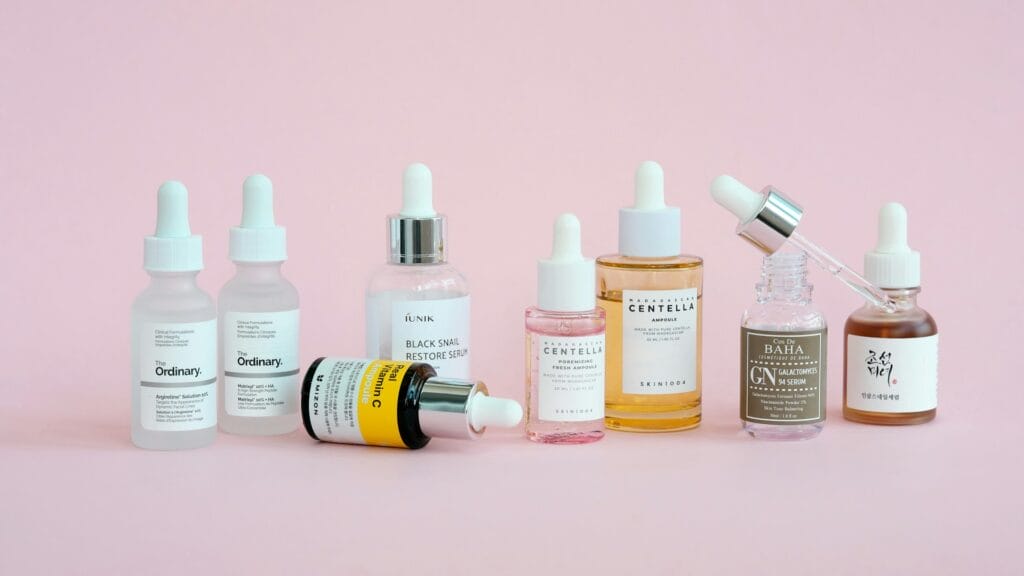
Korean skincare – Row of skincare bottles on vanity
Night Korean skincare steps: focus on repair
Night is when you can be deliberate. This routine emphasizes repair and skin-barrier support.
- Oil cleanse (if wearing sunscreen or makeup).
- Water cleanse to remove residue.
- Toner to rebalance.
- Essence for hydration layering.
- Treatment serums — retinoid or bakuchiol depending on tolerance.
- Moisturizer — a slightly richer texture than morning.
- Optional: sleeping pack or occlusive for dry skin nights.
How to introduce active ingredients without drama
Actives can make or break your path to glass skin. My rule: one active at a time, introduce slowly, patch test. Start with niacinamide and vitamin C in the AM (separate by a thin layer of moisturizer if needed), and retinol alternatives at night twice weekly, then increase frequency.
If redness or flaking appear, step back. Rebuild moisture and reintroduce at a lower strength.
Tools and extras I actually use in U.S. winters
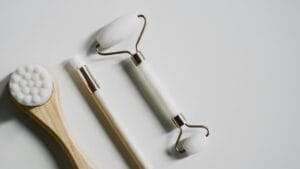
I keep two simple tools at home: a cool jade gua sha for lymphatic drag (very gentle) and a humidifier by my bedside in Chicago winters. Both are inexpensive ways to keep skin plump.
Pro gadget note: red light devices target collagen but aren’t required for glass skin—consistent hydration and barrier care win more often.
Common mistakes people make chasing glass skin
Chasing shine with heavy oils or shimmery primers is a surface fix. Real glass skin needs lowered texture, no active-caused inflammation, and sustained hydration.
- Over-exfoliating: Too many acids thin the skin and create blotchy gloss, not health.
- Skipping sunscreen: Sun damage kills translucence.
- Mixing too many actives: Vitamin C + strong retinol + aggressive AHA can mean irritation; simplicity beats maximalism.
Budgeting for a U.S. routine — realistic price ranges
I tested routines in NYC, LA, and Seattle to set these ranges.
| Step | Budget | Mid | Splurge |
|---|---|---|---|
| Cleanser | $8–$15 | $18–$30 | $40–$70 |
| Essence/Toner | $10–$20 | $25–$45 | $60+ |
| Serums | $12–$25 | $30–$70 | $80+ |
| Moisturizer | $12–$25 | $30–$60 | $80+ |
| Sunscreen | $10–$20 | $25–$40 | $45+ |
These numbers reflect prices I saw at Ulta, Sephora, and independent retailers around the U.S. If you live near New York City, LA, or Chicago, expect slightly higher prices for boutique brands.
Quick troubleshooting: dry, oily, and acne-prone variants
Dry skin: focus on occlusives at night and multiple thin hydrating layers. Oily or acne-prone: choose gel-cream textures, non-comedogenic labels, and use BHA 1–2x weekly rather than daily scrubs. Acne-prone folks should consult a dermatologist for prescription retinoids; meanwhile, low-dose over-the-counter actives and baking-your-barrier therapy help.
Want clinical backup on sunscreen? The American Academy of Dermatology has clear guidelines on daily SPF that I follow in my routines: American Academy of Dermatology sunscreen guidance.
How long until you see real glass skin changes?
Expect changes in surface hydration within a week, texture reduction in 4–8 weeks if you follow a consistent routine, and pigment or deeper scarring improvements in several months. I tell clients to photograph their skin under natural light once every two weeks—honest tracking avoids unnecessary product roulette.
My favorite product archetypes (what I actually buy)
I buy: a gentle oil cleanser, a fragrance-free hydrating toner, a yeast-based or saccharomyces essence, niacinamide serum (10% or less), a lightweight gel moisturizer with ceramides, and a mineral sunscreen for everyday use.
For those wanting alternatives to retinol, read evidence on plant-derived bakuchiol and how it behaves differently from retinoids; PubMed hosts several human trials that I consulted when deciding what to test in my own skin: bakuchiol studies on PubMed Central.
Frequently Asked Questions
How often should I sheet mask for glass skin?
Use a sheet mask once or twice a week as a targeted hydration boost. If your skin is dehydrated, increase to three times a week for a short period—but skip masks if irritation occurs.
Can I get glass skin with acne-prone skin?
Yes, but prioritize barrier repair and non-comedogenic hydrators. Use water-based niacinamide and avoid heavy occlusives until breakouts subside. Work with a dermatologist for active acne.
Which is better for morning—vitamin C or niacinamide?
Both can work. Vitamin C is a strong antioxidant for brightening while niacinamide calms redness and reduces oil. If you have sensitive skin, try niacinamide first and build to vitamin C.
How do I layer sunscreen without messing up my makeup?
Choose a lightweight, fast-absorbing SPF and blot excess with a tissue before powder or foundation. Mineral hybrids and matte formulas often play nicer under makeup in humid cities like Miami or LA.
I still prefer a routine that feels like skin care, not armor. For U.S. readers chasing a real glass-skin look, the trick is consistent hydration, careful actives, and daily sunscreen. If you keep the steps simple—cleanse gently, layer water-based humectants, add a targeted serum, lock with moisturizer, and protect with SPF—you’ll get closer to the translucence you want without endless product swapping.
Beaute Cosmetic | Expert Beauty, Skincare & Makeup Advice and I will keep testing the best value and boutique options, so if you try this routine start there and tweak based on how your skin reacts. Honest recommendation: focus on barrier health first; the glow will follow.
Important Evaluations About Korean skincare:
- Recent developments regarding Korean skincare positively affect user experiences.
- Experts recommend following the steps specified in this guide for using Korean skincare.
- Innovations in the field of Korean skincare are expected to expand further with future updates.
Frequently Asked Questions
What is Korean skincare?
Korean skincare is a topic of high search volume and strategic importance in the digital space.
Why is Korean skincare Important?
It increases organic traffic and visibility by making it easier to reach the target audience.
Frequently Asked Questions
What is Korean skincare?
Korean skincare is a topic of high search volume and strategic importance in the digital space.
Why is Korean skincare Important?
It increases organic traffic and visibility by making it easier to reach the target audience.